Blog
What is SPLOST?
Breaking down the $850 million tax DeKalb voters approved and what review really means
It took me five years to understand the real health and status of Frazier Road. I watched potholes grow. I watched a guard rail take 2 years to get replaced. I watched a bridge get more dangerous, sidewalks and pedestrian railroad crossings sit in limbo.
I spent months emailing Super District 6 commissioner Ted Terry's team. Then I spent hours with County Commissioner turned CEO Lorraine Cochran Johnson. We talked about imagining a DeKalb County where leadership is transparent and work is delivered on time and to the highest quality.
We talked about running the fourth largest economy Georgia (59.3 billion GDP as of 2024) like a business.
In forming these relationships I realize our county leaders, like Commissioner Terry, are attempting to do what so many civil rights and good political leaders in our area have been trying to do for decades: lift ALL people out of poverty and end homelessness, provide a safe community to raise and educate the next generation, put an end to deferring our problems and maintenance by addressing them head on, and most importantly tear down the political walls that have held DeKalb back.
Reimagining DeKalb starts with ensuring our seniors' basic needs are met, our infrastructure can support growth, clean drinking water is available, zoning is logical, and we are not putting data centers in residents' backyards on the south side. After watching Madam CEO's 2026 DeKalb County State of the County Address you cannot help but feel invigorated. This is real leadership with strategic goals for the public to thrive. They do this through transparency and by making sure all DeKalb residents are heard.
That is the context for this committee. SPLOST is not just a sales tax. It is a promise to its stakeholders and investors... you and me, the residents of DeKalb.
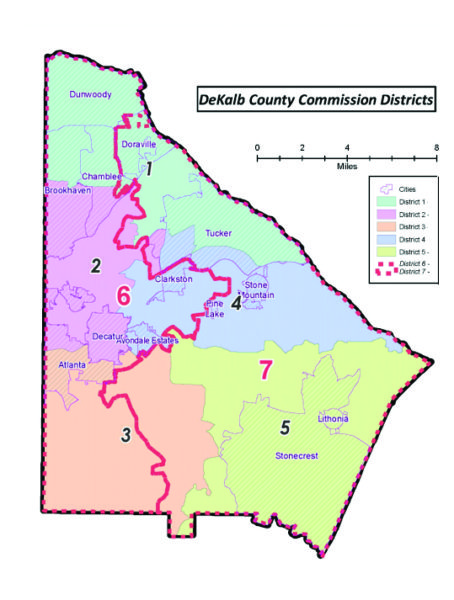
The committee is represented by each county commissioner's appointee as well as the CEO's two appointees, so a total of nine members. You can see the breakdown on the map below:
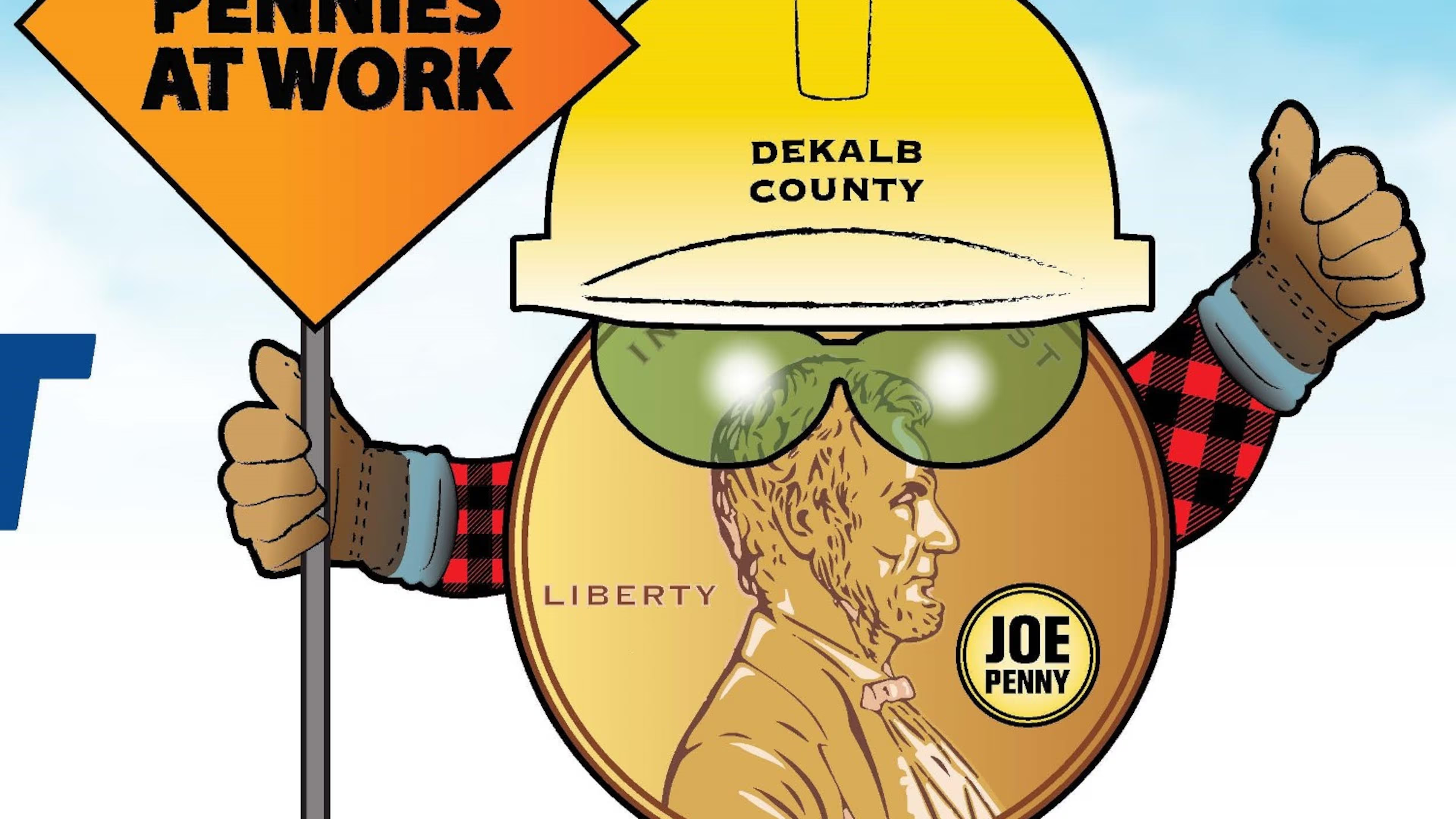
SPLOST stands for Special Purpose Local Option Sales Tax. In Georgia, counties can ask voters to approve a one percent sales tax for a fixed period of time. The money funds specific capital projects. Roads. Parks. Public safety facilities. Things you can point to and say, "that is what we paid for". I am sure driving around the county you have seen the signs of Joe Penny.
It is not a blank check.
DeKalb County put SPLOST II on the ballot in November 2023. Voters approved it. Starting April 1, 2024, a one percent sales tax began being collected across a special district that covers essentially the entire county. The target is $850 million raised over six years. That number is not a guess. It is baked into the resolution the Board of Commissioners adopted in August 2023, signed by every city manager and mayor across thirteen municipalities.
Both SPLOST and EHOST had to pass together. If one failed, neither went into effect. That is not a small detail. It means the homestead option tax and the capital projects tax are linked by design. Voters approved both or nothing. They approved both. (a)
What the Money Is Actually For
The county's share of the $850 million comes out to roughly $496 million. The rest gets distributed to the municipalities based on population percentages locked into the intergovernmental agreement. Stonecrest gets 8.333%. Brookhaven 8.069%. Dunwoody 7.038%. All the way down to Pine Lake at 0.102%.
Each jurisdiction committed to specific projects. Not categories. Projects.
On the county side, the allocations look like this:
- Public Safety: $91.8 million. Fire stations. Police facilities. Courts. An animal welfare facility. Detention facility planning.
- Transportation: $254 million. Two hundred miles of road resurfacing. Twenty-five miles of new sidewalks. Fifteen miles of bike paths and multi-use trails. Bridges. Streetscapes.
- Multi-Generational Recreation: $83.75 million. Parks. Libraries. Multi-generational facilities.
- Capital Outlay: $66.55 million. Water and stormwater systems. Physical and mental health facilities. Renewable energy. Commission district discretionary projects. (b)
The cities each have their own lists. Chamblee committed to transportation improvements, parks, and police vehicles. Tucker to road repair and trail expansion. Decatur to transportation, culture, and the purchase of several specific buildings. Every city signed off on what they were going to do with their share.
This is an important distinction. The Review Committee does not decide what the county and cities do with their allotments. The committee does not oversee city projects. The county does not oversee the cities. This is not about one government telling another what to build.
What it should be is a learning relationship. The county and the cities should share what works. They should borrow good ideas from each other. They should move in unison toward one unified DeKalb.
That is my call to order as a leader. I am trying to tear down walls. I am trying to end the bitterness between the school board, the board of commissioners, city government, and county government. One unified DeKalb. All five districts. Two super districts.
That is the promise voters accepted.
Why a Review Committee Exists
The SPLOST Review Committee is not there to run projects. It is not there to manage departments. It is there for one reason: Accountability.
The job is to track whether the money collected aligns with what voters approved. That sounds straightforward. In practice, it is not.
Projects evolve. Costs change. Timelines slip. Departments shift priorities.
Without review, the original intent of SPLOST drifts. That drift is what erodes public trust.
Every jurisdiction receiving SPLOST proceeds is obligated to maintain separate accounts and get audited under Georgia law. The county and each municipality pay for their own audit. (c)
What I Think the Committee Is Actually Responsible For
As chair of the Review Committee, I think about our responsibilities in four clear areas.
Transparency. Real numbers that tie back to specific projects. Not summaries. Not high-level dashboards. If $55 million is allocated for fire stations, I want to know how much has been spent and what has been built. It is imperative the county cooperates with the committee by allowing us to review project plan details and finances for every project.
Traceability. Every dollar should map to a voter-approved category. If funds are moved, delayed, or repurposed, that needs to be visible and justified. The resolution allows leftover funds from one county project to roll into another county project. That is legal. It still needs to be documented and explained.
Progress tracking. Are projects moving? Are they stalled? Are they even started? A funded project sitting idle is not a success story. Six years sounds like a long time until you are two years in and roads still have not been designed.
Public communication. Residents should not have to dig through meeting minutes to understand what is happening. If SPLOST is working, people should see it. If it is not, they should hear that too.
What We Are Not
This part matters... We are not a rubber stamp. We are not a political body. We are not there to validate decisions after the fact. Review happens at every phase, and public input/review should guide the decisions made for our dollars. If the committee only reacts to what is already done, that is not review. That is documentation.
Where It Gets Hard, and What We Have Communicated So Far
Review sounds clean on paper. The reality is more complicated when:
- The data is spread across jurisdictions. The reports do not always show population-based allocations clearly.
- Reporting formats vary.
- Status labels are not always aligned across reports.
That makes basic questions harder to answer. How much has been collected so far? What has been spent? What has actually been delivered? (d)
When those answers are not easy to find, it becomes harder to keep people confident in the process. The next SPLOST referendum is not just about the projects. It is also about whether the public believes the system is clear.
What Success Should Look Like
If SPLOST is working, you should be able to do three things without effort: find a project that was promised, look up how much has been spent on it, and understand its current status.
If you cannot do that quickly and clearly, something is off in how this is being managed or communicated.
The Bottom Line
SPLOST only works if voters trust the system behind it.
People agreed to tax themselves for a reason. They said yes to roads and parks improvements. Yes to new fire stations in unincorporated DeKalb. That is a specific commitment made in exchange for a specific tax.
Our responsibility as a Review Committee is simple to say and hard to execute....
Make sure the county and cities do what they said they would do.
Sources
SPLOST II Resolution 8-24-2023.pdf
- a. Page 2
- b. Page 5
- c. Page 9
- d. Page 12